I’m writing this from Mexico, here for the wedding of a close friend.
Stepping away from day-to-day operations has a way of sharpening perspective. Distance makes patterns clearer — especially in physical-world technology, where progress isn’t defined by what can be built, but by what can be operated, trusted, and scaled once it leaves the lab.
That distinction gets missed far too often.
In early-stage tech, most conversations center on feasibility. But in reality, the harder question is whether something can survive contact with the real world.
Where Scale Actually Breaks
When physical technology starts working outside controlled environments, four stress points show up immediately:
1) Environment variability Cities, weather, RF noise, human behavior — the real world punishes assumptions. Systems must work where conditions are imperfect by default.
2) Trust and accountability Customers, regulators, and insurers don’t want promises. They want proof. Auditability and safety aren’t add-ons — they’re prerequisites.
3) Workflow integration If technology doesn’t fit how work actually happens, it adds friction instead of leverage. Tools don’t scale. Systems do.
4) Economics under repetition A single success means nothing if margins collapse at volume. Repeatability exposes everything.
Most teams discover these realities after raising capital. By then, the cost of being wrong is high.
Lessons From Operating in the Field
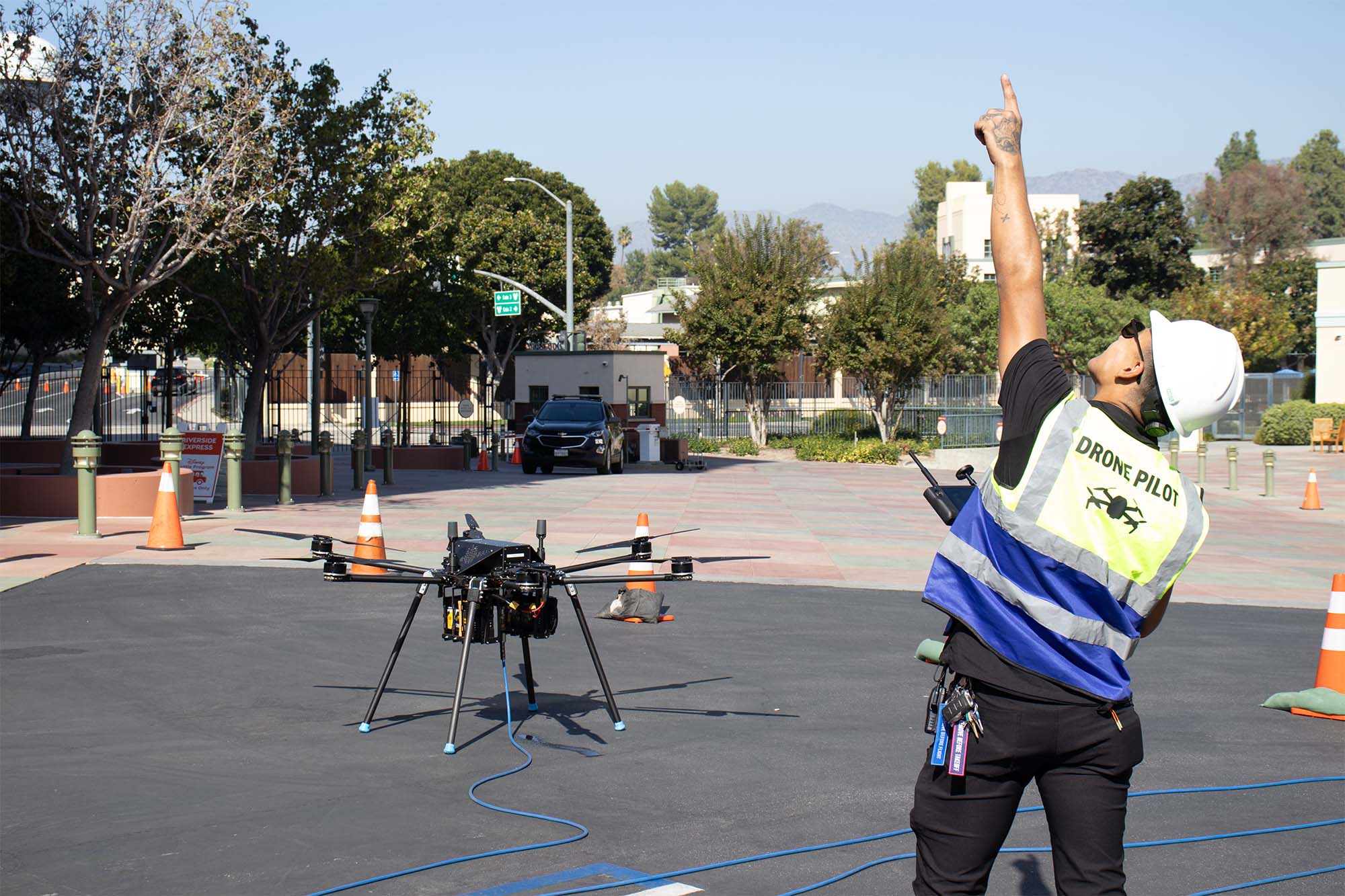
At Advanced Drone Solutions, our early work wasn’t theoretical. We operated in real environments, under real constraints, with customers who expected outcomes — not demos.
That experience reshaped how we think about building entirely.
The insight wasn’t “we need better hardware.” It was “we need better systems.”
Systems designed with regulation, operations, safety, economics, and reliability as first-order inputs — not afterthoughts.
That mindset now informs both how we build and how I evaluate opportunities as an investor.
Why This Matters for Founders and Investors
In physical-world technology, advantage doesn’t come from novelty. It comes from preparedness.
The companies that win aren’t the fastest movers. They’re the ones that remove uncertainty earliest.
They:
- treat regulation as architecture
- design for operators, not engineers
- build trust into the product
- respect economics before scale
These principles apply whether you’re deploying drones, robotics, or products on a shelf. Reality enforces discipline across categories.
Final Thought
The next generation of market leaders won’t be defined by what they invent — but by what they can sustain.
Technology becomes infrastructure only when it earns the right to operate repeatedly, safely, and economically in the real world.
Sometimes it takes stepping away — even briefly — to see that clearly.